
The Importance of Strong Programs for Fundraising Success

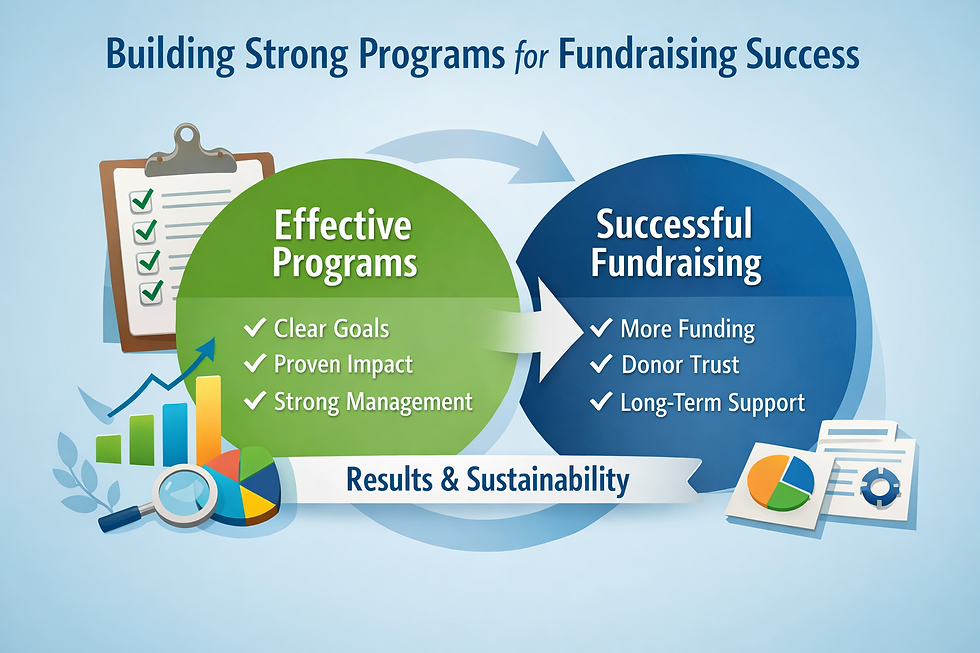
Fundraising success starts long before a proposal is written or a donor is asked. Strong programs form the basis of every successful funding strategy. Strong programs support the organization’s mission and vision. Without them, even the best-written grant or most compelling appeal is declined.
Funders invest in impact. They look for organizations that deliver clear outcomes with strong data, demonstrate accountability, and align with their priorities. A well-designed program signals a response to a need, meaningful impact, and long-term value.
As outlined in Elements Behind Grant Success, proposal quality alone does not secure funding. Strong programs, supported by data, sound financials, and clear outcomes, play a central role in funding decisions.
What Makes a Program “Fundable”
Funders assess programs through a practical lens. They want to see a well-designed program with strong results. A “fundable” program address documented issues in the community rather than one where the scope feels too narrow or specialized, limiting overall community impact
Reasons a grant is denied include:
· Lacks clear, documented community need supported by current data
· Outcomes and impact remain unclear or not measurable
· Weak alignment with the funder’s priorities or funding guidelines
· Budget lacks clarity, credibility, or connection to program activities
Newer nonprofits will often confuse outputs for their outcomes. While serving a set number of meals is important, this doesn’t show the impact of those meals. Click HERE for definitions of outputs and outcomes.
Strong program include these key elements:
Defined goals and outcomes
Programs should state what will change and how success will be measured. Equally important is fully explained the need behind the program. Having vague descriptions weaken credibility.
Evidence and data
Strong programs rely on data to support need and track progress. This includes baseline data, measurable outputs, and documented outcomes. Define how data will be collected and reviewed. Invest in proper software to accurately track the numbers.
Realistic budgets and timelines
Budgets should reflect actual costs. Timelines should show a logical flow from implementation to results.
Demonstrated capacity
Funders look for organizations that can implement and sustain successful programs. This includes staff expertise, partnerships, and past performance. This is why brand-new nonprofits struggle with grant success due to limited results.
How to Build Strong Programs
Creating strong programs requires intentional planning and collaboration across the organization. The development, program, and accounting teams must be on the same page.
Start with community need
Programs should respond to a clearly defined problem. Use data, stakeholder input, and community feedback to shape the design.
Set measurable objectives
Define success early. For example, instead of “improve literacy,” specify “increase reading proficiency by one grade level for 75% of participants within 12 months.”
Design with implementation in mind
Programs should be practical to deliver. Consider staffing, resources, and operational realities during planning.
Integrate evaluation from the beginning
Evaluation is not an afterthought. Build systems to track progress, collect data, and report outcomes consistently.
Collaborate internally
Development staff, program teams, and leadership should work together. This ensures proposals reflect real program capacity and impact.
Moving from Idea to Investment
Nonprofits often focus on funding first and programs second. This approach leads to weak proposals and missed opportunities.
A stronger approach starts with program design. Build programs that solve real problems, measure results, and align with funder priorities. Then, fundraising becomes a process of matching strong programs with the right funding partners.
Organizations that invest in program quality see stronger proposals, higher revenue growth, and deeper funder relationships.
Cheers,
Michelle Crim, CFRE
Dynamic Development Strategies can help. We offer coaching, grant writing, and fundraising services for our nonprofit clients. We specialize in small to mid-size organizations because we understand your challenges. Please contact us for more information.


Comments